

Recognizing Depression in Athletes: A Coach’s Guide
Some athletes seem fine on the surface but are quietly struggling in ways that are easy to overlook. For example, an athlete who seems low energy, withdrawn, or less motivated may be labeled as lazy, uncommitted, or difficult. In reality, they may be dealing with something much deeper. Even at the highest levels of the sport, Olympians and elite athletes have spoken openly about struggling beneath the surface. Check out their stories here.
Coaches are often the first to notice changes in their athletes’ mental health. Athletes frequently identify their coaches as a key source of support during times of distress. 1, 2 However, many coaches feel unsure of what to do when this happens or worry that they may be overstepping. 3 The good news is that coaches don’t need to be experts in mental health to make an impact with athletes with depression. Simply recognizing the signs early and responding with care can help athletes stay connected to their training, well-being, and progress.
What is Depression?
Depression is more than having a bad day, feeling down, or experiencing post-practice or competition fatigue. It is a negative emotional state that can range from unhappiness and discontent to deep feelings of sadness and hopelessness, affecting daily life.4 This may include changes in energy, disrupted sleep patterns, difficulty with concentration, and diminished social engagement.4 Depression isn’t something an athlete can just “shake off.” Its effects are rooted in real, physical changes within the brain’s systems, making it a genuine medical condition rather than a matter of choice. 5
For athletes, changes can appear both in and outside of sport. Sport participation naturally offers powerful mental and physical benefits, such as stress reduction and improved mood, 6 which is why it’s often considered to be a helpful factor in coping with symptoms of depression. However, these benefits don’t make athletes immune to depression. In fact, the connection between athletics and mental health is much more complex. You can explore how athletics affects mental health further here.
Signs an Athlete May be Struggling
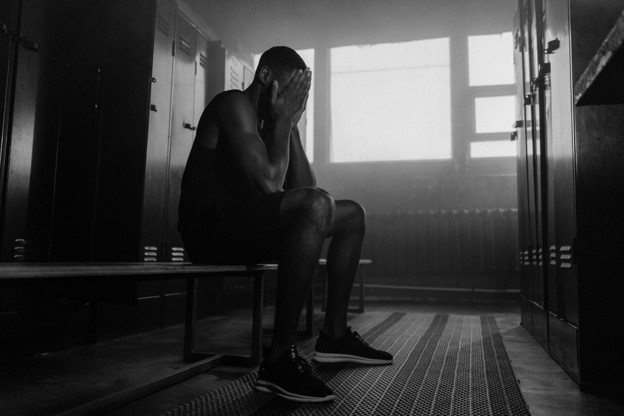
When an athlete is struggling with symptoms of depression, it often shows up in competition before it comes up in conversation. Signs can be subtle and vary from person to person, 6 but common indicators may include: 6, 7, 8, 9
- Diminished effort or engagement
- Low energy or persistent fatigue
- Withdrawal from the team
- Changes in concentration, motivation, or confidence
- Irritability or moodiness
- Feelings of failure
- Loss of interest in their goals
Why do athletes not speak up?

For many athletes, the stigma surrounding mental health leads them to perceive their challenges as weaknesses that must be hidden from others (i.e., coaches, teammates, family, friends). 2 In high-performance environments, where discipline and toughness are emphasized, it can feel especially risky to admit they’re struggling. 2 This is why a good, supportive coaching environment is so important.
What Coaches Can Do?
- Create a supportive environment: Normalize conversations around mental health. It can be difficult at times, but when an athlete understands that it’s okay to struggle, they are more likely to open up. 7 Establishing a culture where the team supports one another can reduce the stigma and feelings of isolation. 10
- Stay consistent: Consistency builds safety. Regular check-ins, both privately and as a team, can go a long way. 2, 3 Even if an athlete takes time off to rest and recover, continuing to check in helps them feel supported and maintains a connection to both you and the team. Isolation often makes depression worse. Encourage athletes to stay involved with the team, even in small ways. Connection can be more important than performance during difficult periods. 10
- Help maintain balance: Promote a healthy athlete-life balance. Many athletes are juggling academics, relationships, and other responsibilities in their personal lives alongside their sport. Encouraging rest, recovery, and interests outside of sport can be protective for mental health. 3,7
- Set healthy expectations and lower pressure when needed: During periods of struggle, maintaining rigid performance expectations can increase stress. The pressure to consistently perform and achieve success can intensify mental distress, making it difficult to cope. 10 Temporary flexibility, without removing structure, can help athletes stay engaged rather than withdraw.
- Provide mental health resources: Coaches are not expected to treat their athletes’ problems, nor should they. One of the most important roles a coach can play is guiding athletes toward appropriate support. Try suggesting working with a mental health professional!
The most effective coaching approach is simple: be consistent, empathetic, and supportive.
Final Takeaway:
Helping an athlete through depression is not separate from helping them get stronger or faster. When coaches notice the signs early, maintain steady communication, and keep athletes connected, they create an environment where athletes can continue to grow. A coach cannot fix depression, but they can offer something just as important: a safe space and support that values the athlete beyond their performance. Sometimes, the most powerful thing a coach can do is not to push harder, but to notice, care, and respond with compassion.
Sources
- Lacke, S. (2021, July 7). What coaches need to know about mental health. Triathlete. https://www.triathlete.com/training/what-coaches-need-to-know-about-mental-health/
- Bissett, J. E., & Tamminen, K. A. (2022). Student-athlete disclosures of psychological distress: Exploring the experiences of university coaches and athletes. Journal of Applied Sport Psychology, 34 (2), 363–383. https://doi.org/10.1080/10413200.2020.1753263
- Sankey, C., Wallace, L., & Caperchione, C. M. (2023). Understanding the role of coaches in supporting the mental health of elite athletes. Journal of Science and Medicine in Sport, 26 (8), 399–404. https://doi.org/10.1016/j.jsams.2023.06.012
- American Psychological Association. (2018, April 19). Apa Dictionary of Psychology. https://dictionary.apa.org/depression
- Mayo Clinic Staff. (2026, March 13). Depression (major depressive disorder): Symptoms and causes. Mayo Clinic. https://www.mayoclinic.org/diseases-conditions/depression/symptoms-causes/syc-20356007
- Kuettel, A., & Larsen, C. H. (2020). Risk and protective factors for mental health in elite athletes: a scoping review. International Review of Sport and Exercise Psychology, 13 (1), 231–265. https://doi.org/10.1080/1750984X.2019.1689574
- Uszaki, D. W. (2024, September 10). Helping Coaches Assist Student-Athletes with their Mental Health. NFHS. https://nfhs.org/stories/helping-coaches-assist-student-athletes-with-their-mental-health
- Frost, J., Purcell, R., Rice, S. M., Tamminen, K., Gouttebarge, V., Adams, W. M., & Walton, C. C. (2026). Mental health literacy in elite-level coaches: Recognition and management of depression and burnout. Journal of Applied Sport Psychology, 1–25. https://doi.org/10.1080/10413200.2025.2589723
- Baron, D. A., Baron, S. H., Tompkins, J., & Polat, A. (2013). Assessing and treating depression in athletes. In Clinical Sports Psychiatry (pp. 65–78). Wiley-Blackwell.
- Simoni J. M. (2022). Best Practices for Coaching an Athlete With Mental Health Concerns. Sports Health, 14 (4), 530–531. https://doi.org/10.1177/19417381221091794